.jpg "company")
The Jozani Chwaka Bay National Park is a 50 km2 (19 sq mi) national park of Tanzania located on the island of Zanzibar. It is the only national park in Zanzibar. The Zanzibar red colobus, Procolobus kirkii (its population count is about 1000) found in the park, a rain forest species (unlike the black-and-white colobus found in other regions of Africa), is also known as Kirk's red colobus, named after Sir John Kirk (1832–1922), the British Resident of Zanzibar who had first brought it to the attention of zoological science. It is now adopted as the flagship species for conservation in Zanzibar, from the mid-1990s. Other species of fauna found in the park are the Sykes monkey, bush babies, more than 50 species of butterfly and 40 species of birds. The nocturnal Zanzibar tree hyrax, which has four ‘toes’ on its front feet and three on its back, is said to be the first hyrax species that has acclimatized to the forest. As part of the tourism circuit, the park attracts 10% of the over 100,000 visitors to Zanzibar every year. Wild life attractions of Zanzibar also include dolphins apart from deep sea fishing for tuna, marlin, and shark.

This remnant primeval forest, some 2 and quarter square miles in area and the only one of its kind in the island, is the home of pigs, monkeys’ leopards and occasionally forest trees. The forest has now been declared a reserve and holds the rare and red colobus monkeys to be seen anywhere else in the world. It was closed to control exploitation in 1957 to allow rejuvenation and is being systematically replanted with mtondoo ( calophyllum inophyllum).
.jpg "company")
This half day guided tour begin and ends at your hotel. The forest has now been declared a reserve and holds the rare and red Colobus Monkey to be seen anywhere else in the world. This guided tour of three hours takes you to Jozani natural forest, the smaller trees and shrubs make several sub canopies under the highest canopy. You will walk through the nature trail of the forest, which is a habitat for many species of animals and is famous for its red Colobus Monkeys the rare species. Return to your hotel .
.jpg "company")
To arrive at jozani forest to see the rera and red colobus monkeys only to be found in Zanzibar, this natural forest is a habitat for many species of animals. Return late afternoon to your hotel for dinner and overnight.

he sea grass beds of the Chwaka Bay, fringed with mangrove forests, are important breeding grounds for marine organisms, including open sea fish species. The mangroves are also good breeding grounds for birds. An Integrated Conservation and Development (ICD) planning for the area is under consideration.
.jpg "company")
The Ngezi Reserve is located in the north-western tip of Pemba, the second largest island in the Zanzibar Archipelago. It borders on the villages of Kiuyu Kwa Manda (south), Tondooni, Verani and Makangale (north), Msuka (east) and Kipangani (west); to the west, it also borders on the Pemba Channel.
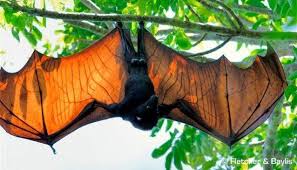
The reserve includes several biomes, including tropical forest, riverine forest, and maquis shrubland. Some plants found in the area are Odyendea zimmermanni, Uapaca guineensis, Antiaris toxicaria, Elaeis guineensis, Erythrophleum suaveolens, Pachystela brevipes, Bombax rhodognaphalon, Quassia undulata, and Croton sylvaticus. Riverine forest mostly comprises Barringtonia racemosa and Samadera indica, as well as Raphia and Anthocleista where swamps are found. Shrubland is mostly found on the Tondooni peninsula, and its vegetation includes Sorindeia madagascariensis, Diospyros consolatae, Tamarindus indica, Afzelia quanzensis, Terminalia boivinii, Cussonia zimmermannii, and Olea woodiana.
.jpg "company")
The dense and wonderfully lush forest at Ngezi is one of the last remaining areas of primary, indigenous forest that once covered western Pemba. It’s notable in that it resembles the highland rainforests of East Africa more than the lowland forests found on Zanzibar. The 1476-hectare reserve is a true double canopy with an upper layer of mgulele, mwavi, mtondoo and mvule trees towering up to 40m high with lianas snaking between them providing swings for raucous vervet monkeys.

Ngezi Forest comprises a unique combination of vegetation types in Eastern Africa. In Ngezi, despite its coastal location, various tree species occur which on the East African mainland are only known to be found in lowland mountain forests e.g. Quassia undulata. In addition, Southeast Asian species as well as some with Madagascan links are to be found e.g. Musa acuminata, Typhanodorun lindleyanum. Settlers have introduced some of the species while the origin of others is still a mystery. Furthermore, Ngezi has its own plant and animal species and subspecies, which don't occur anywhere else in the world. Such species are endemics. So the forest is without a doubt unique in a global sense.
.jpg "company")
A narrow coastal belt is covered with thick bush. The ground is ancient coral rock, broken and often sharp-edged, containing pockets of soil that sustain the vegetation. This area is known as coral rag. Mangrove forests grow on the tidal coastal creeks. Small streams feed into the creeks. During high tides, seawater runs deep up into the forest; sometimes forming brackish swampy areas. In the center of the reserve, moist forest changes abruptly into dominated heathland where the soil is leached sand. The heather, Philippia mafiensis, is only found on Pemba and Mafia Islands.